

Skin Cancer on the Face: Signs, Types, Treatment and When to See a Doctor
Noticing a new spot or a sore on your face that just won't heal can be unsettling. And it should prompt you to act. Skin cancer on the face is one of the most common places it develops, largely because your face receives more sun exposure over a lifetime than almost any other part of your body.
The reassuring thing? When it's caught early, skin cancer is highly treatable. Knowing what to look for makes all the difference.
Key Takeaways
- The face is one of the most common sites for skin cancer, particularly around the nose, cheeks, ears, and forehead.
- The three main types found on the face are basal cell carcinoma (BCC), squamous cell carcinoma (SCC), and melanoma.
- Warning signs include spots that change, bleed, don't heal, or look different from surrounding skin.
- Early detection significantly improves treatment outcomes and often means simpler, less invasive treatment.
- A professional skin check is the only reliable way to confirm what a spot is.
Why Does Skin Cancer Commonly Occur on the Face?
Your face is exposed to UV radiation almost every day of your life. On the school run, during your commute, sitting near a window at work, or simply stepping outside. Over decades, that cumulative exposure adds up.
Australia has one of the highest rates of skin cancer in the world, and the face is one of the most frequently affected areas. According to the World Health Organization, non-melanoma skin cancers are most frequent on parts of the body commonly exposed to the sun, particularly the ears, face, neck, and forearms.
The nose, ears, forehead, lower lip, and the skin around the eyes are particularly susceptible because they protrude or face upward and catch direct sunlight throughout the day. To understand more about how UV radiation affects the skin over time, visit our understanding skin cancer page.
The Three Main Types of Skin Cancer on the Face & What They Look Like
Skin cancer on the face doesn't always look dramatic, especially in its early stages. It can be mistaken for a pimple, dry patch, or age-related change. The appearance varies depending on the type.
Basal Cell Carcinoma (BCC)
BCC is the most common type of skin cancer on the face. According to Cancer Council Australia, BCC accounts for around 70% of non-melanoma skin cancers and most commonly develops on sun-exposed areas including the head and face. It tends to grow slowly and rarely spreads to other parts of the body, but left untreated, it can invade deeper tissue and become harder to treat.
On the face, BCC often looks like:
- A shiny or pearly bump, sometimes with visible blood vessels
- A flat, flesh-coloured or slightly pink patch
- A sore or scab that heals and then returns
- A pink growth with raised edges and a crusted centre
It's often mistaken for a pimple or dry patch, which is one reason people delay getting it checked.
Squamous Cell Carcinoma (SCC)
SCC is the second most common type and can grow more quickly than BCC, sometimes over just a few weeks. Cancer Council Australia notes that SCC generally grows quickly over weeks or months and most commonly appears on parts of the body with the most sun exposure, including the head and neck. On the face, it tends to appear around the lower lip, ears, and temples.
Signs of SCC on the face include:
- A rough, scaly red patch that doesn't go away
- A firm bump or nodule that may crust or bleed
- A sore that keeps reopening
- Thickened skin that feels tender to touch
Because SCCs can spread if not treated early, it's worth getting any persistent rough or scaly patch on your face looked at sooner rather than later.
Melanoma
Melanoma is less common but more serious. It can develop from an existing mole or appear as a brand new spot. On the face, melanoma may turn up anywhere, including on skin that looks normal.
The ABCDE rule, recommended by Cancer Council Australia as a useful guide when checking your skin, is a helpful starting point:
- A for Asymmetry: One half doesn't match the other
- B for Border: Edges are ragged, notched, or blurred
- C for Colour: Multiple colours or shades within the one spot
- D for Diameter: Larger than 6mm, though melanomas can be smaller
- E for Evolving: Any spot that's changing in size, shape, or colour
If a mole or pigmented spot on your face ticks any of these boxes, book a skin check promptly.
Can Skin Cancer Develop on the Nose?
Yes. The nose is one of the most common sites for skin cancer on the face. Because it protrudes and receives direct UV exposure throughout the day, it's particularly vulnerable to both BCC and SCC. The tip, sides, and bridge of the nose are all areas where skin cancers regularly present. The same applies to the ears and lower lip, which are also frequently affected.
When Should I Get a Spot on My Face Checked?
Not every concerning spot on the face is skin cancer, but certain signs are worth taking seriously. See a skin cancer doctor if you notice:
- A new spot that looks different from your other spots
- A sore or scab that doesn't heal within a few weeks
- A mole or pigmented area that's changed in size, colour, or shape
- A spot that bleeds easily or feels itchy or tender
- Any raised, firm lump on sun-exposed skin
Trust your instincts. If something on your face looks or feels different, it's worth getting it checked. Skin cancer doesn't always look dramatic, especially in its early stages.
Is Skin Cancer on the Face Curable?
In most cases, yes, skin cancer on the face is curable, especially when it's detected early. BCC and SCC caught at an early stage are highly treatable, with excellent outcomes for the majority of patients. Even melanoma, the most serious type, has significantly better outcomes when identified before it has the chance to spread.
That's why early detection matters so much. Treatment for early-stage skin cancer on the face is simpler, less invasive, and more likely to result in a clean outcome, with less disruption to your appearance.
How Skin Cancer on the Face is Treated
Treatment depends on the type, size, and location of the skin cancer. Because the face is a cosmetically sensitive area, treatment is planned carefully to remove the cancer while protecting appearance and function as much as possible.
Your doctor will discuss the most appropriate option for your specific situation. Common treatment options include:
Surgical excision
The most common approach. The affected area is removed under local anaesthetic along with a small margin of surrounding tissue to ensure clear edges.
Skin flaps
May be used when a larger area needs to be removed, particularly near the nose, eyes, or mouth. Nearby healthy skin is repositioned to close the wound neatly.
Cryotherapy
Uses liquid nitrogen to freeze and destroy pre-cancerous spots or superficial skin cancers. It's quick and well-suited to early-stage lesions.
Curettage
This involves scraping away abnormal cells, often followed by cauterisation. It's used for certain superficial skin cancers in lower-risk locations.
Biopsies
Performed when a spot looks suspicious but needs laboratory analysis to confirm whether it's cancerous and what type it is. This is usually the first step before any definitive treatment.
For more detail on the surgical options available, visit our surgical treatments page.
The Value of a Professional Skin Check
Self-checking your skin is a good habit, but it has limits, especially on the face where it's easy to confuse a skin cancer with a benign spot, age-related change, or rosacea patch.
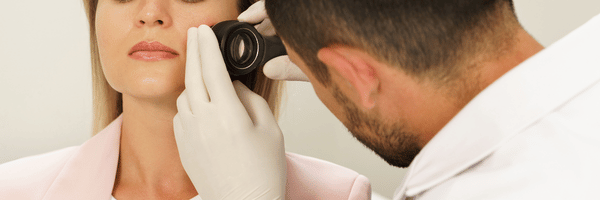
A professional skin check uses dermoscopy, a detailed magnification tool that allows a trained doctor to examine spots at a level the naked eye simply can't reach. At Skin Cancer Gregory Hills, we also use AI-assisted dermoscopic imaging to help assess lesions with greater accuracy.
Early detection matters because treatment for early-stage skin cancer is simpler, less invasive, and more likely to result in a clean outcome, with less disruption to your appearance.
Skin Cancer Checks in Gregory Hills and the Macarthur Region
People living in Gregory Hills, Camden, Narellan, Oran Park, Harrington Park, Mount Annan and Campbelltown experience some of the highest UV exposure levels in the world. Regular skin cancer checks are important for detecting suspicious lesions before they become more advanced.
If you've noticed a spot on your face that concerns you, our clinic at Gregory Hills is accessible to patients across the Macarthur region. Early assessment is always the right call.
Concerned About a Spot on Your Face?
If you've noticed a spot on your face that's new, changing, or simply doesn't feel right, it's worth having it assessed by a professional.
Our doctors at Skin Cancer Gregory Hills are experienced in identifying and managing all types of facial skin cancer, with a careful approach to both your health and cosmetic outcomes.
Book a skin check at our Gregory Hills clinic today, or call us on (02) 4633 9091. We're open Monday to Friday, 7:30am to 5:00pm.
This article is intended for general educational purposes only and does not constitute medical advice. Please consult a qualified healthcare professional regarding any skin concerns.
Frequently Asked Questions About Skin Cancer on the Face
Is skin cancer on the face common?
Yes. The face is one of the most common locations for skin cancer because it receives frequent sun exposure throughout a person's lifetime. The nose, ears, forehead, and lower lip are particularly vulnerable. Australians are at especially high risk, given some of the strongest UV levels in the world.
What does basal cell carcinoma look like on the face?
Basal cell carcinoma often appears as a shiny or pearly lump, a flat pink patch, or a sore that repeatedly heals and then returns. It's frequently mistaken for a pimple or patch of dry skin. If a spot on your face keeps coming back, get it assessed.
Can skin cancer develop on the nose?
Yes. The nose is one of the most frequently affected sites because it protrudes and receives direct UV exposure throughout the day. Both basal cell carcinoma and squamous cell carcinoma commonly appear on the tip, bridge, and sides of the nose. Early detection leads to simpler treatment and better cosmetic results.
Is melanoma on the face dangerous?
Melanoma can be serious because it has the potential to spread to other parts of the body if not detected and treated early. That said, melanoma caught at an early stage is highly treatable. Any mole or pigmented spot on your face that is changing should be assessed without delay.
When should I see a doctor about a spot on my face?
You should arrange an assessment if a spot changes in size, shape, or colour, bleeds, crusts, or does not heal within a few weeks. You don't need to wait until something looks obviously wrong. If a spot feels different or simply doesn't seem right, a professional skin check is always worthwhile.
References
- Cancer Council Australia. Basal and squamous cell carcinoma (non-melanoma skin cancer). cancer.org.au
- Cancer Council Australia. Check for signs of skin cancer, the ABCDE rule. cancer.org.au
- Cancer Council Australia. Skin cancer incidence and mortality. cancer.org.au
- World Health Organization. Ultraviolet (UV) radiation and skin cancer. who.int
- Healthdirect Australia. Skin cancer and melanoma. healthdirect.gov.au

Dr Pedro Valente is a skin cancer doctor at Skin Cancer Gregory Hills with specialist training in plastic and reconstructive surgery and a Diploma in Skin Cancer Medicine. He holds fellowships with the Royal Australian College of General Practitioners, the Australasian College of Cosmetic Surgery, and the American Academy of Cosmetic Surgery. His clinical focus is on skin cancer detection, surgical treatment, and delivering strong cosmetic outcomes, particularly for complex or facial skin cancers. Dr Valente speaks fluent Portuguese and conversational Spanish.